

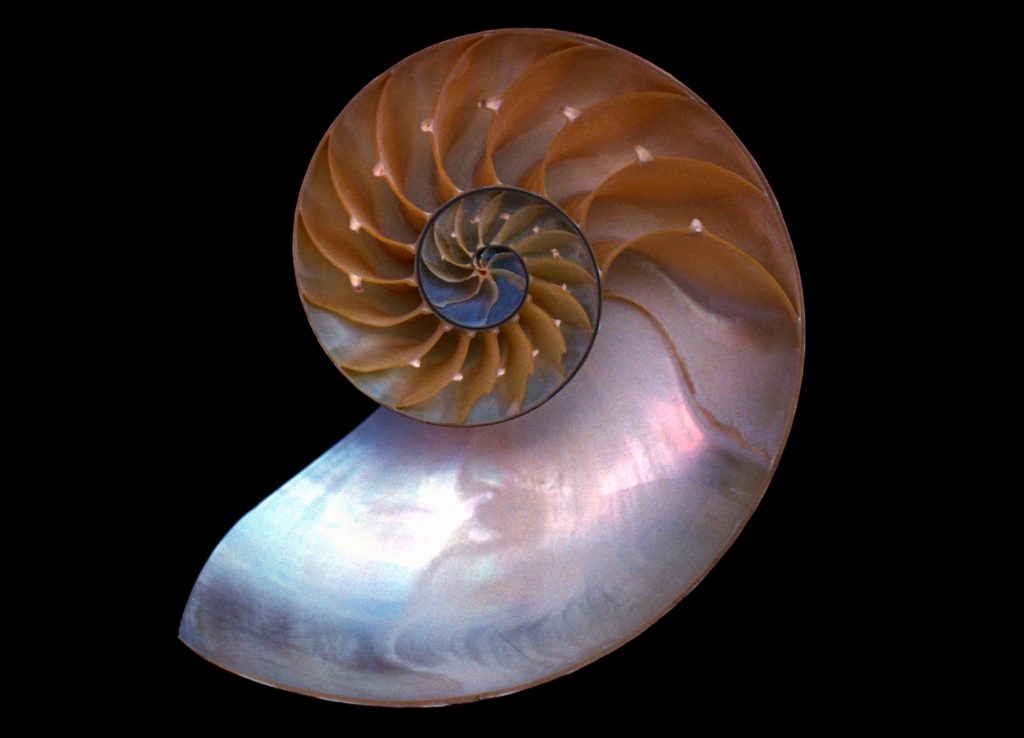
Hold a piece of mother-of-pearl beneath the light and turn it slowly.
At first, it may appear almost silver.
Tilt it slightly, and a trace of blue begins to emerge. Turn it again, and the blue gives way to green, violet, rose, or even a fleeting wash of gold.
Then, just as quickly, the colors disappear.
The shell itself has not changed.
No new pigment has appeared. Nothing has been painted onto its surface.
Only the light—and the angle from which we see it—has changed.
This shifting play of color is one of the most captivating qualities of mother-of-pearl, or nacre. It is known as iridescence.
But why does mother-of-pearl change color?
The answer begins in a world too small for the naked eye to see.
Why Does Mother-of-Pearl Change Color?
When we think about color, we often think about pigment.
Flowers, leaves, paints and dyes contain molecules that absorb some wavelengths of visible light while reflecting others. The wavelengths that reach our eyes help determine the colors we perceive.
But nature has another way of creating color.
It is called structural color.
Rather than depending primarily on pigments, structural color arises when microscopic structures interact with light.
We encounter versions of it in peacock feathers, butterfly wings, beetle shells—and in the luminous surface of nacre.
The shifting blues, greens, violets and golds of mother-of-pearl are therefore not simply a layer of color sitting on its surface.
They emerge from a relationship between material, light, and the angle of observation.
Mother-of-pearl does not merely reflect color. Its structure changes the way light reaches our eyes.
What Is Nacre?
Nacre, commonly known as mother-of-pearl, is a biological composite material produced by certain mollusks and found on the inner surfaces of their shells.
It is also the material involved in the formation of many pearls.
To the naked eye, nacre can appear smooth and continuous. Look much closer, however, and an entirely different landscape emerges.
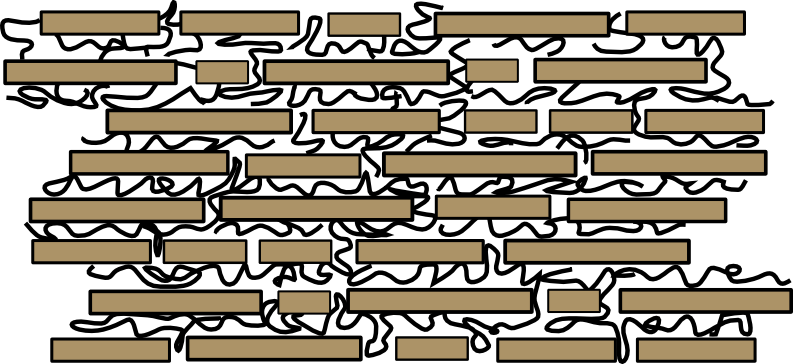
Nacre is built from vast numbers of microscopic layers composed largely of thin aragonite crystals, a crystalline form of calcium carbonate, together with a smaller amount of organic material.
These tiny platelets are arranged in layers, sometimes compared to microscopic bricks in a wall.
A mollusk builds this architecture gradually. Layer upon layer. Over time.
What appears to us as a quiet, polished surface is actually an intricate structure assembled on a scale we cannot ordinarily see.
And when light enters that structure, something remarkable happens.
_11.jpg)
What Is Iridescence?
Look at an ordinary colored object and its color may remain relatively stable as you move around it.
Mother-of-pearl behaves differently.
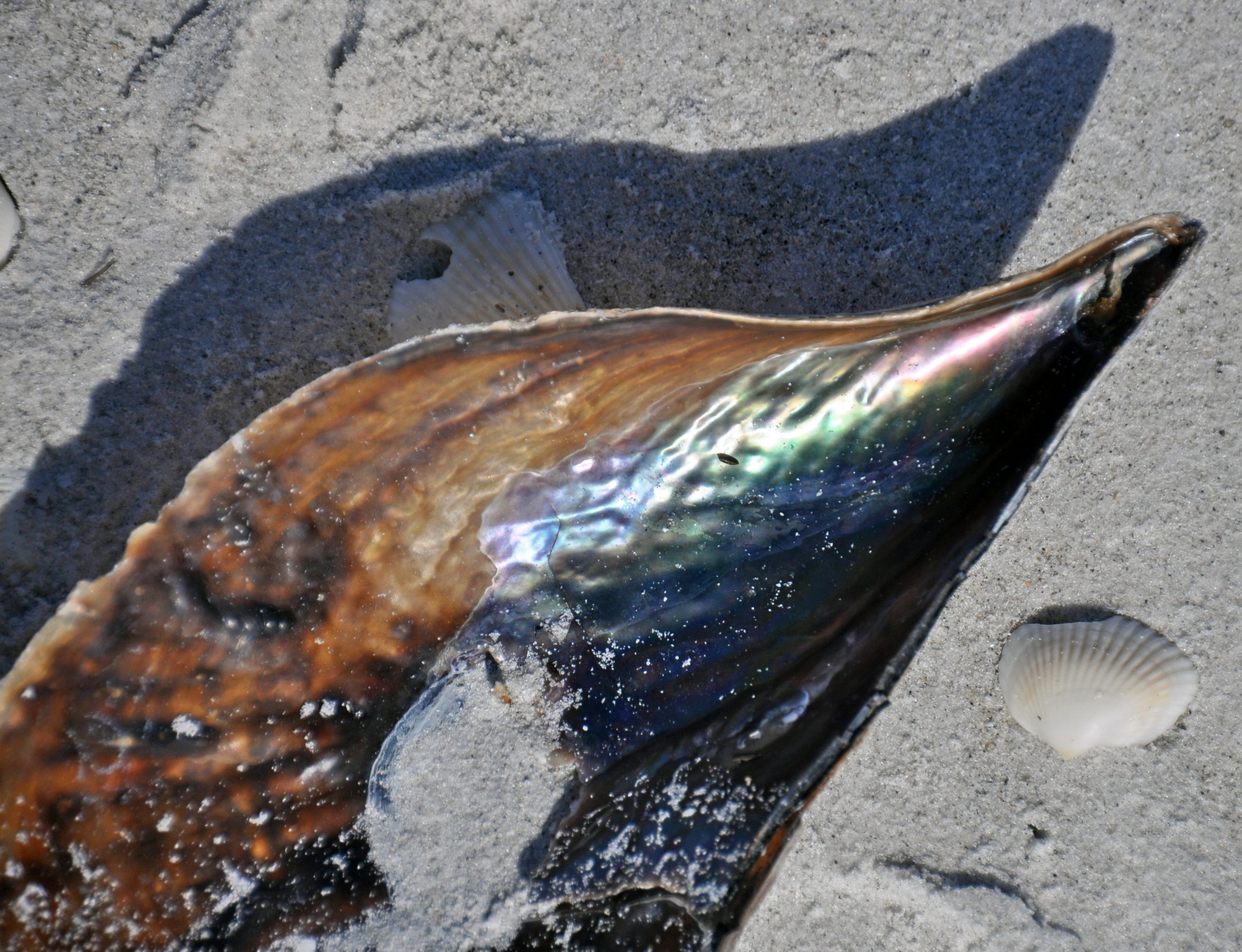
From one angle it may appear blue-green. From another, violet. Move again, and a flash of pink or gold may appear.
This change in perceived color with viewing or illumination angle is known as iridescence.
It is why mother-of-pearl is so difficult to describe with a single color.
And it raises another question: Why should changing the angle change what we see?
The answer lies in the journey light takes through nacre’s microscopic structure.
The Shell Does Not Paint Its Colors
Imagine white light falling onto a piece of nacre.
Not all of that light simply strikes the outermost surface and returns directly to your eye.
Some light is reflected from structures closer to the surface. Some travels farther before being reflected. Different portions of light therefore travel slightly different paths.
When those light waves meet again, they can interact. Certain wavelengths may reinforce one another, while others are reduced.
This process is related to optical interference.

At one viewing angle, wavelengths associated with blue or green may become especially visible. At another, violet, rose or gold may emerge. Change the geometry again, and the colors shift.
The shell has not suddenly acquired a different pigment.
The shell creates a structure. Light enters that structure. Color emerges.
That distinction is at the heart of nacre’s beauty.
Why Does Mother-of-Pearl Look Different from Different Angles?
Because the color we see does not depend on the material alone.
It also depends on where the light comes from, how the nacre is positioned, and where the observer is standing.
Turn a shell gently in your hand. The relationship changes.
A blue sheen fades. Green appears. A violet edge emerges. A trace of gold may exist for only a moment before disappearing again.
We can think of the experience as an encounter between three participants:
Material × Light × Observer
Remove or change any one of them, and the visual experience changes too.
Mother-of-pearl is therefore not experienced as a single, fixed color. It is experienced through movement.
Why Is Mother-of-Pearl So Difficult to Photograph?
This is also why mother-of-pearl can look surprisingly different in person than it does in a photograph.
A photograph freezes a single arrangement: one moment, one angle, one lighting condition, one relationship between object and observer.
But nacre reveals itself through change.
When you hold it and turn it slowly, light travels across the surface. Blue emerges. Green rises. Violet appears at an edge. Then the surface settles back into pale silver.
A still photograph can capture one of those moments. It cannot fully capture the transition between them.
For mother-of-pearl, movement is part of seeing.
You are not simply looking at an object. You are watching an object respond to light.
Why Is Every Piece of Nacre Different?
No two shells grow in exactly the same way.
Their environments differ. Their curves differ. Their thicknesses and microscopic structures vary.
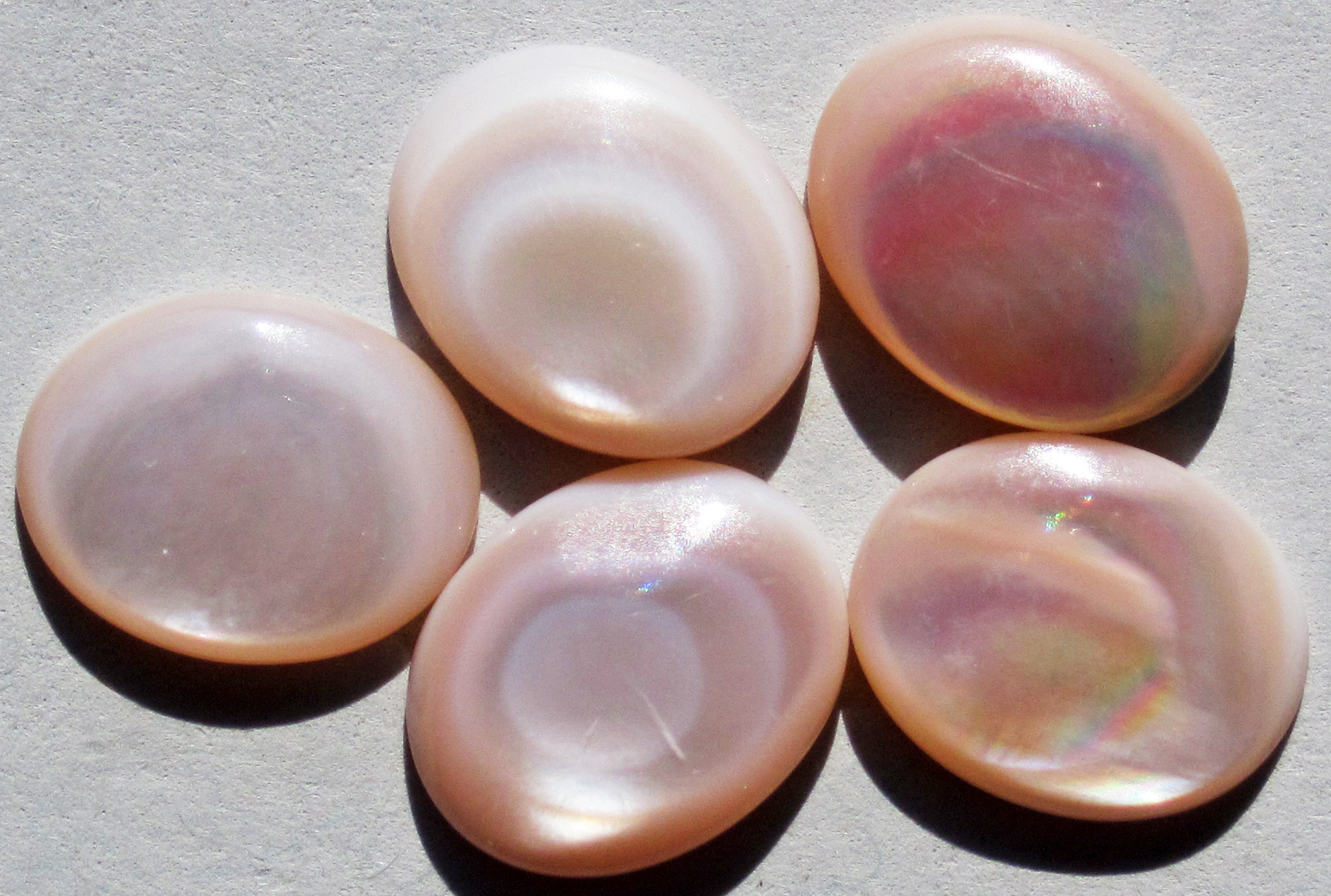
As a result, when natural shell is cut into pieces of mother-of-pearl, each fragment can interact with light a little differently.
One may lean toward blue and green. Another toward violet. Another may reveal a warm flash of gold at a particular angle.
Even different areas of the same shell can show different textures and optical effects.
This natural variation is part of what distinguishes nacre from a perfectly uniform manufactured surface.
Industry often seeks consistency: the same color, the same texture, the same finish.
Nature does something else.
It creates variation.
_(Algiers_Beach,_Sanibel_Island,_Florida,_USA).jpg)
Is Mother-of-Pearl Color Caused by Pigment or Structure?
The most accurate answer is more nuanced than simply choosing one or the other.
Natural materials are optically complex.
The appearance of nacre can be influenced by its composition, microscopic structure, layer thickness, arrangement, surface condition, lighting and viewing geometry.
But its characteristic iridescence is strongly associated with the interaction of light with its finely layered structure.
That is why structural color is such an important concept for understanding mother-of-pearl.
It also reveals something remarkable: Knowing what a material is made of is not always enough.
Sometimes, how matter is arranged is just as important as what the matter itself is.
Nature does not always need to invent a new substance to create something extraordinary.
Sometimes it simply builds an extraordinary structure—and allows light to do the rest.
From Shell to Sea, Aurora and Nebula
Magnify mother-of-pearl and it begins to become strangely unfamiliar.
The object we recognize as a shell starts to disappear.
In its place are layers, waves, shifting bands of color, light and shadow.
Some resemble water. Some evoke clouds. Others recall an aurora—or even a distant nebula.
Of course, nacre is not a nebula, and a shell is not a universe.
Their scales are profoundly different, and so are the physical processes that create them.
Yet the human eye often discovers visual echoes between different scales of nature.
Perhaps that is part of nacre’s fascination.
Something only a few centimeters across can evoke a sense of enormous space.
The vast does not always have to be encountered somewhere far away.
Sometimes, when we look closely enough, a larger world seems to appear.
A Shell Does Not Hold One Color. It Holds a Relationship with Light.
Scientifically, light is not literally stored inside a shell.
But poetry allows us another way of describing what we experience.
We might say: A shell does not hold a single color. It holds a relationship with light.
Because the question that makes nacre fascinating is not simply: What color is it?
The deeper question is: What will it become when the light changes?
The same piece may appear different in morning light and evening light. Indoors and outdoors. Seen straight on or from the side.
It has no single visual answer.
It continues to respond.
From Nacre to Nacre Cosmos
This is one reason we chose the word Nacre as part of the name Nacre Cosmos.
Nacre is more than a beautiful natural material.
Within a small piece of mother-of-pearl are layers built slowly by a living organism.
There is ocean. There is time. There is matter. And there is light.
Later, human hands cut, shape, polish and arrange pieces of shell.
In the Chinese art of Luodian, the natural iridescence of shell becomes part of another story—one of craftsmanship, imagery and cultural memory.
That story belongs to another part of our Journal: The Art of Luodian.
Here, in Shell & Light, we return to the moment before all of that.
A simple moment:
Light falls upon a shell.
And color appears.
Some Colors Exist Only in the Encounter
Perhaps the most beautiful thing about mother-of-pearl is not how many colors it contains.
It is that it refuses to remain one color.
It waits for light.
And, in a sense, it waits for us.
When material, light and our gaze meet in a particular moment, we see a trace of blue, a wash of green, a veil of violet, or a fleeting flash of gold.
A moment later, it may already be different.
So the next time you hold a piece of mother-of-pearl or a work of Luodian, do not only ask what color it is.
Turn it slowly. Let the light move across it. Move your own gaze with it.
What you are seeing is not simply a static surface.
It is an encounter that began long before you arrived:
The ocean gives rise to the material.
Time builds the layers.
Light awakens the color.
And we see it.
Nacre Cosmos
Look closer. See further.